Picking out the perfect Hitachi Wheel Loader for your project isn’t just about choosing any old machine — it really takes some careful thought. Every job has its own unique needs, so what works for one might not be ideal for another. Hitachi offers a range of models, each tailored for different tasks like construction, mining, or farming. Getting to know the specs and features of each can really help you boost your efficiency on site.
Most experienced operators will tell you that not all wheel loaders are created equal. Some are better suited for heavy lifting, while others shine in tight spots or smaller tasks. So, taking the time to reflect on what you really need can save you a lot of headaches down the line. Don’t forget to check out performance stats, fuel economy, and maintenance aspects. And if you have buddies or colleagues who've used certain models, their feedback can be super helpful too.
Choosing the right Hitachi Wheel Loader isn’t just a quick click — it’s a decision that can impact your operations for years. Think about the benefits, but also make sure there’s good support and parts availability where you are. Doing a bit of homework now can save you from costly mistakes later and make sure you’re making the most of your investment.
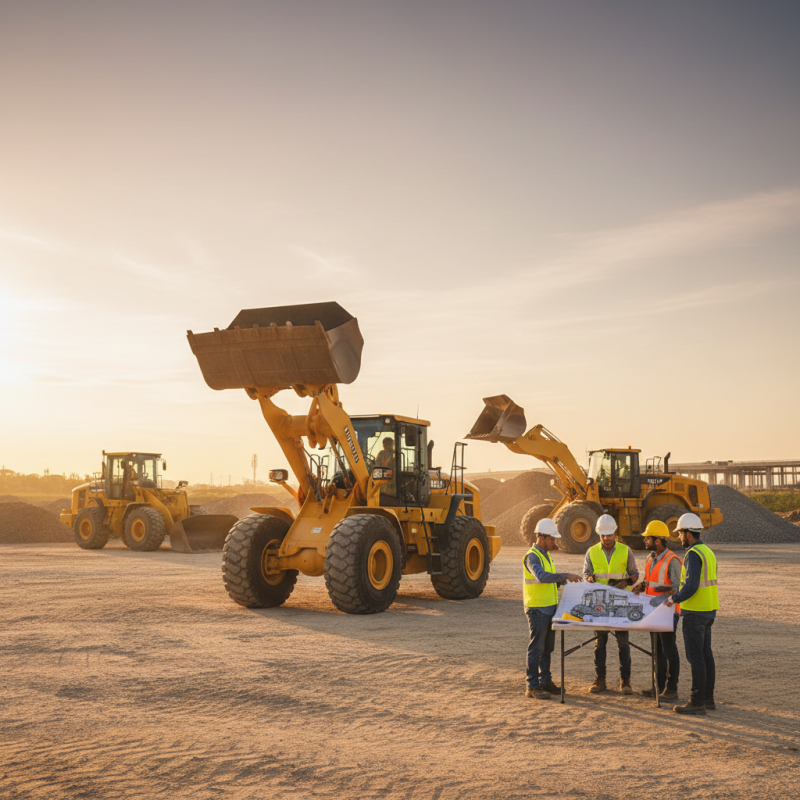
Understanding Your Project Requirements for a Wheel Loader
Choosing the right wheel loader depends on understanding your project needs. Various factors come into play.
Assess the site conditions. Are there tight spaces or rough terrain? These details determine the size and power you need.
Consider the types of materials you'll handle. Heavy materials require a robust loader. Lighter materials enable the use of smaller, more agile machines. Each loader has a specified capacity. Failing to match the loader to your material can lead to inefficiency.
Tips: Evaluate the load capacities. Grasp the difference between operating weights. Don’t overlook attachments. Different tasks necessitate specific equipment.
Sometimes, less is more. A smaller loader might perform better than a larger one in confined areas. Reflect on your project scale. Is it a short-term job or a long-term investment? Your choice should align with that clarity.
Assessing the Different Models of Hitachi Wheel Loaders
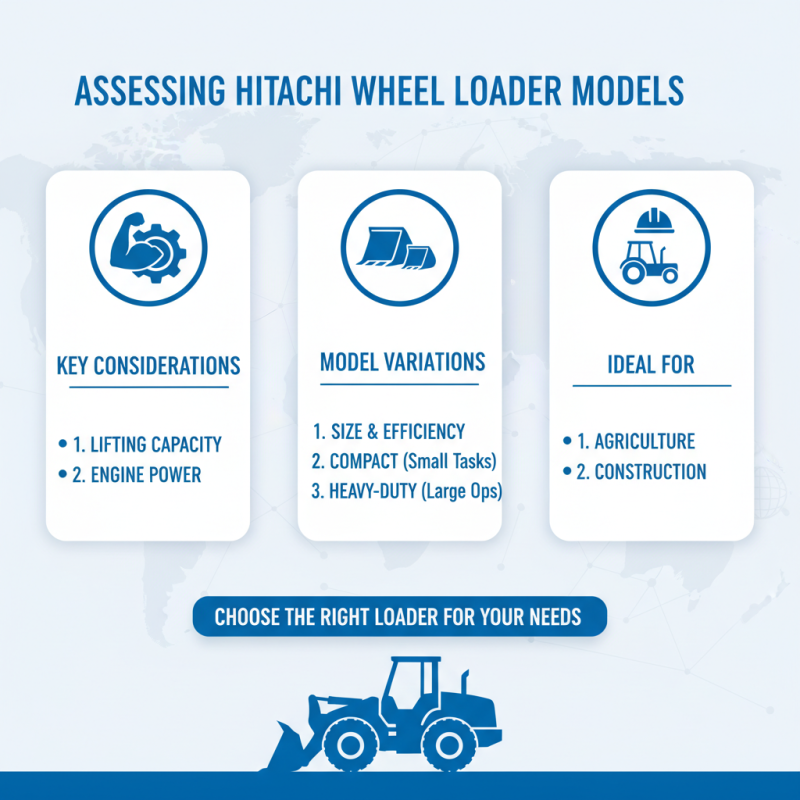
Choosing the right wheel loader involves assessing various models and their features. When reviewing Hitachi wheel loaders, consider the lifting capacity and engine power. Models vary in size and efficiency, catering to different agricultural or construction needs. Some are compact for smaller tasks, while others are designed for heavy-duty operations.
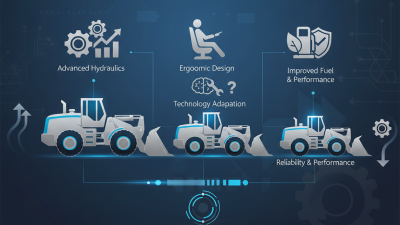
Look at specific features as well. For instance, hydraulic systems may differ significantly between models. This can affect performance and maintenance costs. Some may find the technology in newer models complex. Understand that simplicity can sometimes be a better option, allowing for easier repairs.
Consider your environment too. The model should navigate your worksite effectively. An unsuitable size can hinder productivity. Reliability is crucial, as breakdowns lead to lost time and increased expenses. Research user experiences to gauge common issues. Always reflect on your unique requirements to ensure a suitable choice.
Comparing Specifications: Power, Capacity, and Engine Types
When selecting a wheel loader, key specifications are crucial. Focus on power, capacity, and engine types to find the right match for your needs. Power influences how effectively the machine performs under load. Larger jobs may require models with higher horsepower. Understand the tasks you’ll tackle for better selection.
Capacity is another significant factor. It dictates how much material the loader can handle. Models with a larger bucket capacity can increase efficiency. However, too much capacity may lead to operating difficulties or reduced mobility on-site. Assess your typical loads carefully.
Tips: Always consider the engine type. Diesel engines offer durability and efficiency for heavy-duty tasks. If working in urban areas, consider tiered engines for lower emissions. Evaluate your environment to optimize performance. Consulting with experienced Hitachi Wheel Loader Manufacturers can provide insights tailored to your application. Each application and site may require a different balance of these specifications. Embrace the decision-making process.
Evaluating Attachments and Customization Options
When selecting a Hitachi wheel loader, evaluating attachments and customization options is essential. Attachments can significantly enhance the loader's capabilities. For instance, a versatile bucket can aid in digging, lifting, and loading materials, but it’s crucial to choose one that fits your project requirements. Customization features, like adjustable hydraulic systems, allow for greater flexibility when tackling various tasks.
Consider your operational environment when assessing these options. Different surfaces may require particular attachments, such as forks for pallet handling or grapples for debris. It’s vital to consult with a Hitachi Wheel Loader Manufacturer to explore which configurations align best with your business needs. However, customization can sometimes lead to performance limitations if not carefully chosen. Too many attachments might complicate usage and maintenance.
Reflecting on past experiences can guide decision-making. If an attachment once caused operational delays, it’s wise to reconsider similar options. Also, think about the long-term impact of your choices. You may need to adapt as your projects grow. Prioritize those attachments that provide true value and reliability, ensuring your investment works for you effectively over time.
Considering Operating Costs and Maintenance Needs
When selecting a wheel loader, operating costs must be a priority. Different models have varying fuel efficiencies. Some may seem cheaper but can lead to higher long-term expenses. Regular maintenance plays a role too. Neglecting routine checks can escalate repair costs later.
Another major aspect to consider is the machine's compatibility with your current equipment. For example, a wheel loader should easily pair with your Hitachi Excavator. This efficiency can enhance productivity on site. If the loader isn’t compatible, it might slow down operations and increase costs.
Lastly, think about the resale value of the machine. A well-maintained loader typically retains better value. However, many overlook this and later regret it when selling. Make sure to balance initial costs with potential future value. Investing in reliable equipment is crucial for long-term gains.
Exploring Dealer Support and Warranty Options
When selecting a wheel loader, dealer support is crucial. A strong dealership offers more than just machinery. They provide essential services like maintenance and repairs. This support can impact your operations significantly, especially when equipment fails.
Warranty options are another vital consideration. A comprehensive warranty can safeguard your investment. Look for clear terms that cover essential components. Make sure to understand what is included. It's important to be aware that some exclusions may apply. This can lead to unexpected costs if not clarified.
Lastly, consider the availability of parts and service. Dealers should stock vital parts, like Hitachi Excavator Parts, ensuring minimal downtime. Reflect on the reputation of the dealer, as their reliability can make a big difference. A solid relationship with your dealer can enhance your overall experience with the equipment.
Reviewing User Feedback and Industry Ratings
When selecting a wheel loader, user feedback is invaluable. Many operators emphasize the importance of performance in harsh conditions. They describe how certain models handle rough terrain and heavy loads. Positive reviews often mention fuel efficiency and ease of operation. These aspects can greatly affect daily productivity.
Industry ratings can guide your choice as well. High-rated models often showcase durability and reliability. Users frequently highlight features like hydraulic lift capabilities and operator comfort. However, not all feedback is positive. Some users report maintenance challenges with specific features. This can lead to unexpected downtime.
Considering user experiences helps to identify potential drawbacks. Comparing various loader models based on real-world performance can provide clarity. It's essential to thoroughly analyze both positive and negative reviews. Doing so reveals which features truly matter for your specific needs. Balancing industry ratings with user insights leads to a well-informed decision.
Enhancing Lonking Loader Performance with Original LG816.02.02.05 Double Variable Filter: A Guide to Quality Accessories
The performance of heavy machinery, particularly loaders, significantly depends on its components, especially filters. Among these, the original double variable filter, designated as LG816.02.02.05, stands out as a critical element for enhancing operational efficiency. This filter is designed specifically for loaders, ensuring optimal filtration that contributes to the overall functionality and responsiveness of the machinery.
Investing in the LG816.02.02.05 filter element is a smart decision for operators looking to maximize their equipment's capabilities without overspending. Its high-quality construction not only provides durability but also ensures that the loader runs smoothly under various conditions. By maintaining cleanliness in the hydraulic system, this filter element helps prevent potential issues that could lead to costly repairs or downtime, making it an essential accessory for effective machinery operation.
Furthermore, the favorable pricing of this filter makes it an attractive choice for contractors and equipment owners alike. By upgrading to this quality accessory, users can enjoy improved loader performance and longevity, ultimately contributing to a more productive worksite. Investing in the right components, such as the original LG816.02.02.05 filter, allows operators to achieve the highest standards of efficiency and reliability in their heavy machinery operations.
FAQS
: Concentrate on power, capacity, and engine types to find the right loader for your tasks.
Power determines effectiveness under load. Higher horsepower is essential for larger jobs.
Capacity dictates material handling. Larger buckets can increase efficiency, but too much may hinder mobility.
Diesel engines offer durability. For urban work, tiered engines reduce emissions.
Fuel efficiency varies by model. Some cheaper options lead to higher long-term expenses.
Neglecting maintenance can lead to increased repair costs in the future.
A compatible loader enhances productivity. Incompatibility can disrupt workflow and inflate costs.
Strong dealer support includes maintenance and repairs. This can significantly impact your operations.
A comprehensive warranty protects your investment. Clarify terms to avoid unexpected costs.
Dealers with readily available parts reduce downtime. A reputable dealer can enhance your experience.
Conclusion
When selecting the best Hitachi Wheel Loader to meet your project's specific needs, it's essential to begin by understanding your operational requirements. Different models offer varying power, capacity, and engine types, making it crucial to assess which specifications align with your demands. Evaluating the available attachments and customization options can further enhance the loader’s functionality for specialized tasks.
Additionally, consider the operating costs and maintenance requirements associated with different Hitachi Wheel Loader models. Analyzing dealer support and warranty options is also important to ensure reliable service and protection for your investment. Finally, reviewing user feedback and industry ratings will provide valuable insights into the performance and durability of each model, guiding you towards an informed decision.
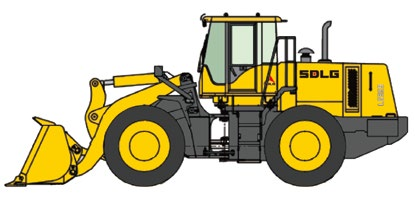 Wheel Loader
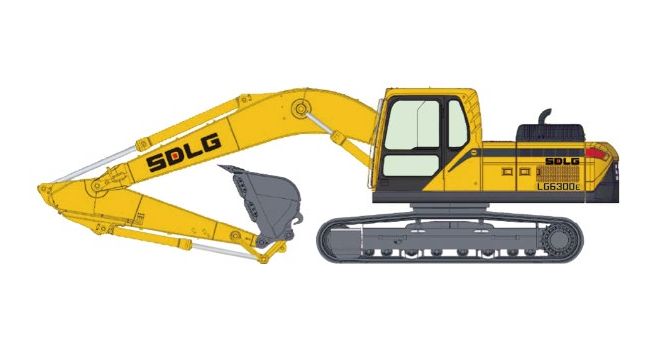 Excavator
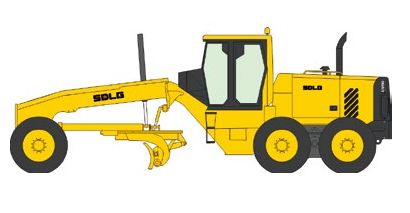 Motor Grader
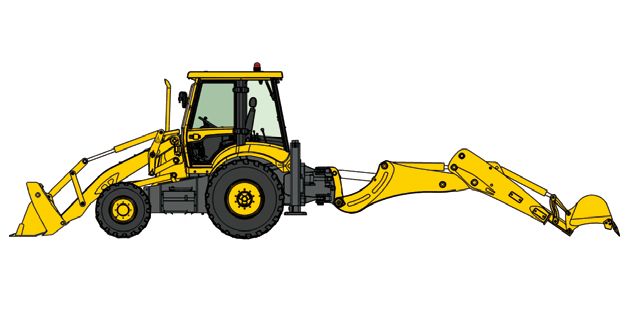 Backhoe Loader
 Road Roller
 Spare Parts